Want to become a visiting fellow? Check out the “opportunities” tab!
Upcoming Visiting Fellows
José Alhambra (March-May 2026)

José Alhambra is a postdoctoral research fellow at Complutense University of Madrid, Spain. He has developed his work in the field of argumentation theory and informal logic. His doctoral dissertation, “The Place of Analogy in Argumentation Theory”, examines the use of analogies for justificatory purposes and their role in argument evaluation. He is currently working on a research project on the debate between particularism and generalism in the theory of argument. In this context, generalism is the claim that the logical evaluation of arguments depends on a suitable supply of general rules that specify what kinds of conclusions can be drawn from what kinds of data, while particularism rejects this claim. The central points of contention concern the role of context in the evaluation of the reason posed by an argument and whether such evaluation can be conducted on a case-by-case basis. During his visit to the Critical Thinking and Civic Engagement Lab, José will further explore these issues, along with the ethical and social implications of both particularism and generalism.
Luis Andrade (September – November 2026)
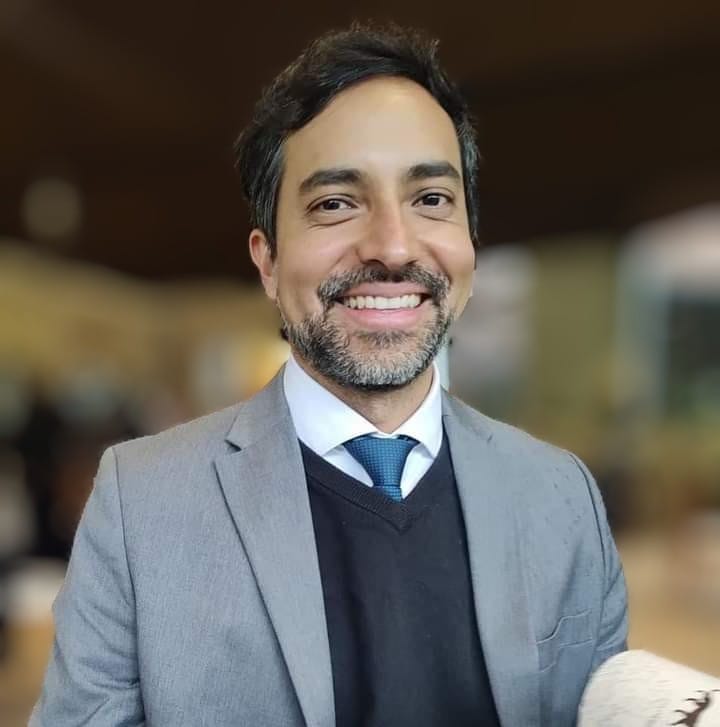
Luis Andrade is a Ph.D. student in philosophy and cognitive sciences at the National Autonomous University of Mexico. He also teaches logic and ethics at the National High School of Mexico. To strengthen students’ argumentative competencies, he previously conducted doctoral research in education, designing teaching strategies grounded in situated cognition theory on the one hand, and argumentation theory on the other. Currently, he is undertaking research aimed at building a normative theory of argumentation through what has been called the negative path—that is, by first understanding how effective argumentation functions in real societies where structural injustices prevail and reliably influence communicative practices. These conditions can cause a form of unwarranted harm to marginalized arguers, identified by Patrick Bondy as argumentative injustice. The ultimate goal of this work is to substantiate and outline pedagogical interventions to prevent or mitigate such injustices. During his internship at the Critical Thinking and Civic Engagement Lab, funded by the Mitacs Globalink research project “Addressing Argumentative Injustice Through Pedagogical Interventions for Pre-University Youth”, and in collaboration with Katharina Stevens, Luis will develop example exercises and instructional plans to address argumentative (in)justice early in education.
Amalia Haro (January-March 2027)

Amalia Haro is a postdoctoral research fellow at the NOVA Institute of Philosophy (NOVA University of Lisbon). Her current work within the project MultiPoD (Multilingual and Multicultural Spaces for Political Deliberation) focuses on the study of multicultural argumentative practices, examining argumentation-related injustices affecting oppressed groups. She holds a double PhD in Philosophy (2025) from the University of Granada and the University of Groningen. Her areas of specialization include philosophy of language, argumentation theory and feminist argumentation theory. Her work explores the connection between certain fallacies and forms of injustice, norms governing argumentative exchanges that create barriers to equal participation and systematically disadvantage marginalized groups, as well as ways in which adversarial forms of argumentation contribute to these injustices. During her visiting to the Critical Thinking and Civic Engagement Lab, funded by the Mitacs Globalink research project “Fallacies as Argumentative Resistance? Poisoning the Well and Ad Baculum”, and together with Katharina Stevens, Amalia’s work will focus on examining how the use of certain fallacies may help mitigate the impact of power imbalances and may therefore sometimes be considered acceptable in argumentation.
Past Visiting Fellows
Tracy Bowell (Jan-Feb 2026)

Associate Professor Tracy Bowell is based at Te Whare Wananga o Waikato – The University of Waikato – in Hamilton on the North Island of Aotearoa New Zealand. Aotearoa has been Tracy’s adopted home for over 30 years. Before moving to Aotearoa, she studied Philosophy at the Universities of Sussex and Cambridge in the UK. She completed her PhD, on metaphysics and epistemology, at the University of Auckland. Tracy’s principal research interests are in argumentation and critical thinking. Her publications include articles on virtue theories of argumentation, argumentation and social justice, argument and post-truth, protest as argument (forthcoming), and various aspects of critical thinking pedagogy. She is also co-author (with Robert Cowan and Gary Kemp, University of Glasgow) of Critical Thinking: A Concise Guide, the 6th edition of which will be published during 2026. Tracy’s publications also include work in Philosophy of Education, Wittgenstein’s philosophy and feminist philosophy, as well as work on higher education pedagogies. Tracy is the current CEO of the Australasian Association of Philosophy.
While visiting the Lab, Tracy is undertaking a project on Charity as principle and virtue in argumentation. The project examines whether charity is an argumentative virtue, and the extent to which it is related to enacting the principle of charity. It will also consider which other argumentative virtues come into play when the principle of charity is applied in argument interactions. Tracy can be contacted at taboo@waikato.ac.nz
Olena Yaskorska-Shah (Jan – April 2025)

Olena Yaskorska-Shah’s main interest falls into the investigation of persuasive communication and applying computational tools for the teaching and dissemination of logic and critical thinking skills. She has been working in different international and interdisciplinary research groups investigating argumentation in context, such as ARG-tech, University of Dundee, UK, IALS, Università della Svizzera italiana, Switzerland and New Ethos, Warsaw University of Technology, Poland. The current list of applications can be checked here: https://orcid.org/my-orcid?orcid=0000-0003-4669-9462 .
Currently she is working towards developing methods and epistemic tools for critical information processing, which would have applications in such domains as media literacy and epistemology, discourse studies, methodology of sciences, etc.
If you are interested in argumentation in discourse or visualization and computational tools in teaching and studying argumentation and critical thinking, please contact me: OYaskorska@gmail.com .
Anjali Bauri (Jan-Feb 2025)

Anjali Bauri is pursuing a Master of Arts in philosophy at the University of British Columbia. She completed a Bachelor of Arts and Science in philosophy and psychology, with an honours in philosophy. Her research has been primarily focused on children, their vulnerability, and caregivers’ obligations towards children. Her work draws on several fields of study both within and on the boundaries of philosophy (applied ethics, biomedical ethics, social-political philosophy, childhood studies, feminist philosophy, argumentation, social justice, etc). While she is at the Lab, she is working on two papers: “Opposing Children: Adversarial Argumentation in Caregiver-Child Contexts” and “Ethics of Doubt and Skepticism in Adversarial and Cooperative Models of Argumentation. You can find out more about her here.
If you want to talk about grad school or about children and how they argue, feel free to reach out at anjalie.828@gmail.com