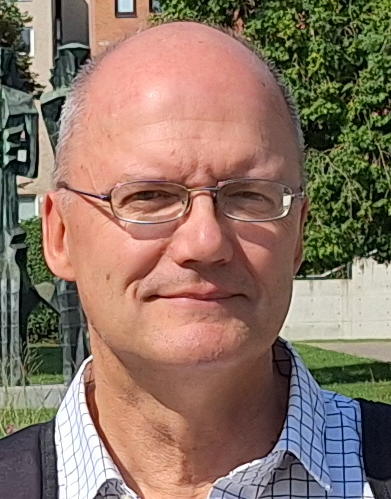
Georg Boenn


In his book, Computational Models of Rhythm and Meter, Dr. Boenn explores new methods for composition, analysis, and transcription of musical rhythms based on psychoacoustics and music cognition research. He proposes a new process for the automated transcription of rhythms from audio sources by investigating the relationship between rhythm, form and performance.


Georg Boenn is an Associate Professor in the Music Department of the University of Lethbridge, where he teaches acoustics, electronics, audio synthesis, and programming. His research focuses on audio programming, composition, and expressive timing in music performances. His musical output includes works for solo instruments, chamber and vocal music, orchestral, and electronic music.

Dr. Boenn studied composition at the University of Music in Cologne, Germany. His main teachers included Elisabeth Wangelin-Buschmann, Jürg Baur, and Clarence Barlow. After graduation, he lived in Paris, France, studying Music Informatics at IRCAM (the Institute for Research and Coordination in Acoustics/Music). Georg then completed his PhD in Computer Science at the University of Bath, The UK, where he worked with John Fitch, developing computational models and algorithms for composition and automated music transcription.

Georg has completed artist residencies at the Zentrum für Kunst und Medien [ZKM] (the Centre for Art and Media) in Karlsruhe, and at the artists colony in Worpswede, Germany. He was invited to the Centre for Computer Research in Music and Acoustics (CCRMA) at Stanford University as a visiting scholar. He also founded the Studio for Electronic Music at the University of Music in Bremen, Germany.
Activities

Oral presentation

We invite project proposals suitable for a 15 to 20-minute oral presentation.

Presentation venue

The presentation venue (the University Recital Hall) includes a 2-channel PA, digital projection system with an HDMI connector only, 1 microphone. Computing technology (e.g., laptop, desktop systems) will not be provided – bring your HDMI adapter please.

Performance

We invite project proposals that are suitable for a performance (in the University of Lethbridge Recital Hall). The performance can take numerous forms, from a staged acoustic instrumental work to a staged mixed composition or improvisation with technology (e.g., analogue and digital instruments; instrumental and computer/algorithmic performance; live electronics). Fixed media compositions (e.g., film and music; surround-sound experiences) are also performances. The project proposal should include the performance of one work. Eligible projects also include the performance of a multi-movement work or an excerpt of a longer piece of music.

Presentation duration

The approximate duration of the performance is recommended to be from 3 to 10 minutes. Proposing a duration of longer than 10 minutes is possible; however, the symposium is not able to support a proposal that includes a lengthy event or complete recital with numerous compositions.

Performers

The symposium does not provide performers; instead, the project leader must confirm any performers required for the project. Getting the commitment of a stage manager is recommended for an ensemble performance requiring numerous artists. Identify all performers, and stage manager (if applicable), when the proposal is submitted.

Performance venue

The University Recital Hall accommodates an audience of 200 people. Two pianos reside in the hall, a Steinway D concert grand piano and a Yamaha S6 grand piano. A 6-channel Meyer Sound loudspeaker array, plus QSC subwoofer, are available for sound projection. The hall is equipped with a fixed open white (no colour) lighting configuration of LED and incandescence bulbs. Digital projection facilities include a 7500-lumen (MODEL: NP-PX750U) Widescreen Professional Installation Projector with HDMI connector only. The projector screen is 6.3 X 3.5 meters and drops down at the rear of the stage (upstage). The Hall is directly wired to our state-of-the-art recording studios located on the upper level of the Centre for the Arts.

Performance practice demonstration

We invite project proposals that are suitable for a 15 to 20-minute staged demonstration of performance practices on your instrument[s]. Your proposal should not constitute a recital; instead, blend a discussion (e.g., oral presentation) about a performance practice, which you have learnt – or are learning, with an illustration of the practice (e.g., play a related musical excerpt on your instrument). An extract from a larger work is eligible for this call for participation.

Performance duration

The duration of the performance component of your performance practice demonstration should be from 3 to 10 minutes. The remaining time should be dedicated to discussion. 

Performance venue

The University Recital Hall accommodates an audience of 200 people. Two pianos reside in the hall, a Steinway D concert grand piano and a Yamaha S6 grand piano. A 6-channel Meyer Sound loudspeaker array, plus QSC subwoofer, are available for sound projection. The hall is equipped with a fixed open white (no colour) lighting configuration of LED and incandescence bulbs. Digital projection facilities include a 7500-lumen (MODEL: NP-PX750U) Widescreen Professional Installation Projector with HDMI connector only. The projector screen is 6.3 X 3.5 meters and drops down at the rear of the stage (upstage). The Hall is directly wired to our state-of-the-art recording studios located on the upper level of the Centre for the Arts.

Tabletop exhibit, poster, research pitch

We invite you to submit a project presentation suitable for a Student Exhibition, which will occur over several hours and will run concurrently with all other symposium activities. Please be prepared to remain at your exhibition station for the total duration. We are accepting proposals for: (1) a tabletop exhibit; (2) a research poster; (3) a 5-minute research pitch. Due to the technical specifications of your project, be prepared to arrive 60 to 90 minutes before the symposium begins in order to set-up (exhibit or poster), or if applicable, complete a sound check and test your visual aids (research pitch). Furthermore, during the symposium, be prepared to respond to questions about your project. Your project, which must showcase your present-day or recent research and creation, can take one of the three forms below. Remember, you may submit more than one proposal. Create a new submission for each proposal. Furthermore, keep in mind that if you submit multiple projects, the review committee might only be able to accept one of your projects, due to the anticipated quantity of submissions.

Tabletop exhibit

During the symposium, be prepared to operate a tabletop exhibit in the University Recital Hall Lobby. You will be provided with tables, chairs and electrical (power extension cord, power bar). Computing and unique interface technology (e.g., laptop, desktop computer, control surface) will not be provided. Please note that we will do our best to provide supplementary equipment (e.g., multiple computer monitors). However, due to the anticipated number of student participants, an excess amount of supplementary equipment will not be available. Consequently, we urge all participants to come fully prepared with their own gear. A request for an excess amount of supplementary equipment may result in the submission being rejected.

Poster

During the symposium, be prepared to stand at your research-creation poster in the University Recital Hall Lobby and receive questions about your research from the public and other participants. Your poster must have be a minimum of 36 x 48-inches (92 x 122 cm). A board for installing your poster will be provided. Computing (e.g., laptop, desktop computer) will not be provided.

5-Minute research pitch

During the symposium, we are offering a limited number of brief (5-minute) oral presentation time slots for students to deliver a “research pitch” in the University Recital Hall. Although the content of a research pitch is not standardised, we suggest you consider including the following.

  1. State your research thesis (question, enquiry, theory) clearly, succinctly, and efficiently.
  2. If the function of your thesis is to build a theory, consider how the theory serves to describe, explain and/or interpret the variables and variability of a phenomenon or experience within the world.
  3. How do your ideas relate to phenomena and experiences within the world?
  4. Identify at least one significant realised, or anticipated, outcome as a result of your work.
  5. Include a reference to at least one real-world project, artist, organisation, etc. in an effort to support and contextualise your work.
  6. Talk about why your project is significant to a broader community.
  7. What ways of knowing the world are you trying to uncover?
  8. Please prepare and rehearse prior to your presentation.

Note that the 5-minute research pitches will run concurrently with all other symposium activities; however, depending on the number of submissions received, a dedicated time block may be created for the research pitch activity. In this case, we anticipate having momentary breaks, during which all symposium participants will turn their attention to a “research pitch”. We will not offer any formal Q&A after each research pitch. The presentation venue (the University Recital Hall) includes a 2-channel PA, digital projection system with an HDMI connector only, 1 microphone. Computing technology (e.g., laptop, desktop systems) will not be provided – bring your HDMI adapter please. If you submit a proposal for this activity, be prepared to work under these time and technical constraints, which are consistent with present-day conference standards.  For instance, be prepared to arrive 60 to 90 minutes before the symposium begins in order to complete a sound check and test any visual aids.

Call for participation

2026 Bounce & Cadence Symposium for Music and Audio Research

bounce | bouns |
noun
• the process of rendering a completed song into audio files or into just one audio file: bounces can also be used with other music applications.

cadence | ˈkeɪdns |
noun
• a sequence of notes or chords comprising the close of a musical phrase: the final cadences of the Prelude.

We invite proposals for participation for the 2026 Bounce & Cadence Symposium for Music and Audio Research to be held at the University of Lethbridge on 28 March, 2026.

Due date:

The Call for Student Participation will be open from 9AM, on 17 November, until 11:59PM, on 9 March (Mountain Time).

Click here to see participation types

Guidelines and information

  1. Bounce & Cadence follows no overarching theme. However, we endeavour to offer undergraduate and graduate students an opportunity to showcase culminating research projects; for instance, we would enjoy receiving proposals that feature end-of-course, end-of-term, or end-of-degree outputs and outcomes. Moreover, projects may be classified as research, research and creation, or creation, only.

  2. We wish to encourage students from diverse backgrounds, and origins, to get involved. Furthermore, we strongly support research from equity-deserving scholar-artists in order to illustrate a more thorough and inclusive worldview of research in the arts.

  3. Collaborative projects are welcomed. Collaborative projects are inherently more complex to organise. So, students, who submit a team proposal, should have a good working relation (e.g., clear responsibilities for each member of the team).

  4. Enter the submission system by going to the submission link, below. Be sure to read through all of the requirements for the submission. You may want to prepare the submission requirements off-line before re-entering the system and clicking on the final Submit button.

  5. You may submit more than one proposal. Create a new submission for each proposal.

  6. Do not anonymise your proposal materials.

  7. After submitting your proposal, the website will automatically generate a message with a link for editing your submission. Please bookmark this link for future reference.

  8. The submission system uses Qualtrics (a cloud-based survey tool). All data submitted remains on servers located in Canada.

Participants

Sorted alphabetically by last name

B–K

Morgan Brooks

Morgan Brooks is in her final semester of university, pursuing a double major in Music Composition and Digital Audio Arts. Passionate about music and sound, she is especially drawn to the storytelling and imagery that music can create. Morgan has composed original scores for three independent films, developing a strong interest in how music supports narrative and emotion on screen. Alongside her creative work, she gains practical studio experience through her role in Studio 1, where she assists with recording workshops as well as junior and graduation recitals. These experiences have strengthened her technical recording skills and her ability to work within collaborative production environments. Throughout her time at university, Morgan has developed a particular interest in film and video game audio. She enjoys exploring new techniques in sound and music, and is excited by the many ways audio can shape immersive storytelling experiences.


Mianna Van Essen

Mianna Van Essen is a fourth year DAA student specialising in recording and production. She has an interest in electronics and audio artefacts that are outside of composition and control. Using cassette tapes and old recording gear through a childlike lens rediscovers some of the ingenuity and beauty behind chance in modern recording production. Her featured piece is a visual and acousmatic Exploration of the Queen Elizabeth II Trans Canada Highway.


Véronique Fortier

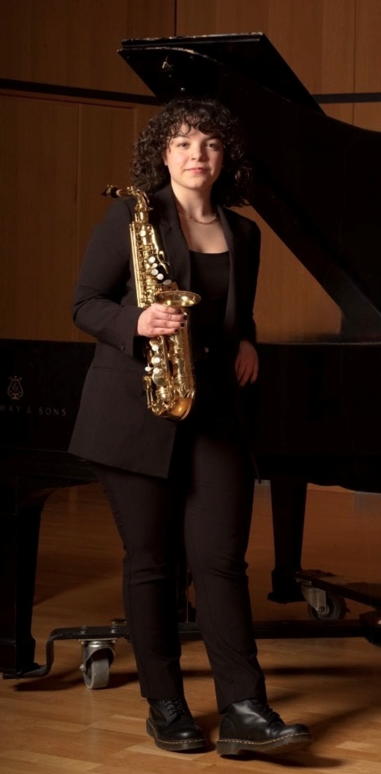
Véronique Fortier is a fourth-year saxophone studio major at the University of Lethbridge. She has a deep passion for music and enjoys exploring a wide range of musical pursuits. In addition to performance, Véronique is actively involved in composition and conducting, using these creative outlets to further expand her musical perspective. Her curiosity and enthusiasm for music have also led her to begin exploring the field of music research, where she is developing an interest in studying music from both creative and academic perspectives. Through her studies and musical activities, Véronique continues to seek opportunities to grow as a musician, performer, and scholar, embracing new challenges and experiences.


Gavin Goldthorpe

Gavin Goldthorpe is a 4th-year Digital Audio Arts student currently interested in experimental music and aesthetic noise. He works with a vocabulary of distortion as expression and the cusp of sound becoming noise and noise becoming sound. He performs on electric guitar and extreme processing methods along with intricate digital sculpting to create dense intentional textures. He has a foundation of playing heavy music and recording engineering, and is working to hone his current practice rooted in energy, texture, and sound as physicality. The track is an expression of his continued interest in distortion as both artistic and philosophical medium.


Terrell Jordan

Terrell Fernandes, Artist name: Terrell Jordan, is a third year DAA student interested in Electronic Music Production and songwriting. He focuses on creating full experiences that envelope the listener in not just music, but emotional and visual experiences. Terrell primarily uses synthesis and melodic songwriting techniques to create experiences. Having a remix on YouTube with over one million views, Terrell has been working on refining his craft and finding a unique style. The featured piece is an showcase of his increasing production skills and experience creation.


Samuel Kliever

Samuel Kliever is a Bachelor of Music student who enjoys exploring new ways to express emotion through his performance and artistic works. Samuel enjoys working at high levels in a variety of music fields, including music production, theatre performance, composition, and a variety of sound technology studies. Just as he creates a bridge between athletics and the nuance of storytelling in professional theatre, Samuel uses his many life experiences to create performances that engage thought and provoke discussion. Samuel’s piece highlights nostalgia, showcasing the importance of remembering our pasts; he hopes to nurture emotions within audience members to create a memorable experience.


LA Music Industry Summer Academy 2024 shot by Zachary Iziah Smith from Zenematic

Max Kortbeek

Throughout his four years as a Digital Audio Arts student at the University of Lethbridge, Max has worked professionally as a recording, mixing, and mastering technician for various artists in Lethbridge. Max’s activities cross multiple genres from classical to folk, and country. Alongside his unforgettable, currently underway, undergraduate degree, Max has studied at, and has attained a Certificate in Digital Audio from, the Southern Alberta Institute of Technology in Calgary. He has also attended the L.A. Music Industry Summer Academy at Paramount Studios in North and South Los Angeles. Working in the music field and singing in the university choir (The University of Lethbridge Singers), have helped to inform Max’s fascination for overtones and vocal harmony. The culmination and integration of this passion is the subject of his research presentation, entitled “Constructive Interference: Overtones in Barbershop Quartet Music”.


Rachana Kulkarni

Rachana Kulkarni (or Zon) is a fourth year DAA student and composer who creates experimental sound designs and acousmatic music. Through her artistic work she investigates how noise creates emotional responses and how glitch aesthetics and sound fragmentation affect listeners. She processes piano recordings to create abstract textures by using granular synthesis and random sequencing techniques. The acousmatic composition Fractured Resonance by the artist presents a sonic exploration of beauty through disruptive sound transformations.


M-W

Graeme Marion

Graeme Marion is a third-year Digital Audio Arts student, interested particularly in hip-hop music production. Over the past three years, this fascination has continued to grow through course material, collaboration with colleagues, and personal experimentation. Outside of music production, Graeme enjoys playing basketball, trying to rap and butchering songs at karaoke.


Douglas Monaghan

Douglas Monaghan is a fourth year DAA student interested in all aspects of music production. His music focuses on exploring emotion and memory through the combination of sonic landscapes and traditional song structure. Douglas utilises a combination of real world recordings and electronic instruments/synthesizers to create a sonic soundscape like no other. He has previously worked at Made Human Studios in Toronto, ON, as an audio engineer and recently released his debut single ROOF, under the moniker Stormy Lake. The featured piece is an electro-acousmatic piece written in collaboration with Jude Rose.


Gibson O’Beirne-Bishop

Gibson O’Beirne-Bishop is a third-year Digital Audio Arts major, with an interest in synthesis, sound design and sampling. His primary focus on his music is centred around creating sonic textures and styles unique to digital and electronic works. With special experience with various digital audio workstations, especially FL Studio, Gibson’s work merges the sounds of digital synthesizers, manipulated samples, and unorthodox experimental techniques to create sounds such as feedback noise. This experience in digital music is paired with years of learning about music theory and performance techniques as well, as he is also a multi-instrumentalist on the piano, bass guitar and alto saxophone. Today, Gibson puts his sampling and digital audio skills on display in an experimental breakbeat piece.


Tobi Ojo

The piece is composed by Tobi Ojo who is a fifth year DAA student interested in Artistry, Music Production, and Composition. His work usually focuses on themes of minimalism as well as experimentation. Tobi tends to produce a lot of his work through Fl Studio, but has always been very open to using field recordings which would be implemented with Tobi has worked in different areas of live audio engineering in one instance as an audio technician for ContainR as well as worked as an audio tech for many different churches in Alberta.


Izzy Paige

Izzy Paige is a third year BA Music student and multimedia artist whose works focus on ethnomusicology, field recording and experimental performance. Paige takes advantage of the digital age by mutilating recorded sound in her sample-based works. Whether she’s creating alien loops of mundane sound using incognito field recordings or bringing noise to the dance floor through disintegrating drum grooves, her DIY approach to sound shines through. Paige is committed to using open-source audio programming software, which allows her to go beyond the imposed limits of the DAW and work with sound on a more granular level. Her finished patches are freely available to download from https://github.com/IzzyPD/.


Jude Rose

Jude Rose is a fourth year DAA student interested in both the composition and production of music Jude focuses on adding energy and identity to pieces, with the goal being making the piece unique and interesting. His work experiments with creating and sampling sounds and processing them in a way that becomes something new. This piece is an electro-acousmatic piece written in collaboration with Douglas Monaghan, showcasing the dichotomy of nature and the space in which we live.


Griffin Sawatzky

Fin Sawatzky is a third year DAA major with an interest in emotional electronic music. His music focuses on nostalgic elements that play on people’s emotions and make them get lost in their own minds. Fin uses sound fonts, soundbites, and other nostalgic audio from years past to craft fresh but familiar soundscapes. The featured piece is a collaboration between Fin and two likeminded individuals that will feature these auditory techniques as well as visual aspects.


Seth Villamil

Seth Villamil is 2025-2026’s winner of the Joyce and Ron Sakamoto award for his interests in audio perception research and tinnitus during his capstone. Seth continues to garner curiosity in academia through strong, impactful questions that will influence his prospects as a post graduate student. With interests of teaching sound production techniques at the latter half of his career, Seth is finding new ways to apply his knowledge of sound in places one may not think of in order to make the most of his studies. With current collaboration with the Centre for Indigenous Arts Research & Technology as a Research Assistant at the University Of Lethbridge, Seth is researching technical methods with Digital Audio Workstations and Linguistic Software to produce huge data outputs that could potentially be used for training models and archival purposes. Seth’s studies in the Digital Audio Arts continues to offer him opportunities to network and collaborate. From providing feedback and teaser materials for Dr. Arlan Schultz’ Aurawand, to building connections with studio performance majors in forms of recordings and livestreams; He finds ways to gain experience in and outside of the classroom. Seth hopes to continue his pursuit as a Sound Recordist for films come graduation for 2028. With live sound experience, recording studio time and post sound projects, he continues to apply himself in many fields to stay sharp and multi-faceted in an ever evolving field. Seth keeps himself busy and forever curious of the rabbit hole that is Sound Engineering. Besides his interest and obsession with sound, he is a Beyblade fanatic as the President of the University Of Lethbridge Beyblade Club, as well as a motorsports fan enjoying recreational simracing in virtual reality titles like Assetto Corsa and Dirt Rally.


Yifan Wang

Yifan Wang is an electronic music producer from Calgary, Alberta, currently completing his 4th year as a Digital Audio Arts student at the University of Lethbridge. His signature sound features independent melodic phrases played together to form emergent harmonies that convey extended meanings. His style of electronic counterpoint draws on ambiguous, hybridised instruments, vocal-like textures, and shifting basses to create an atmosphere that keep listeners on their toes. His philosophy centres on finding creative and innovative ways to reproduce the details of natural sound, allowing composers to communicate their ideas in greater detail and authenticity, while offering musical ways to enhance an arrangement beyond the compositional material itself. His hope is to uncover distinct tools that would provide Christian artists with unique ways to express their faith in music.