teachingcentre

Troubleshooting Grade Sync Issues

Grades are passed from Turnitin to the Moodle Gradebook via a secure “handshake.” While this is generally more reliable than older versions, you may occasionally find that a grade appears in the Turnitin Inbox but is missing from your Moodle Gradebook. Below are the most common causes and the steps you can take to fix them.

1. The “Self-Fix”: Resend Grades to LMS

If a specific grade (or the whole class) is missing from Moodle, your first step should be to manually trigger a sync. This “pokes” Moodle to look for new data from Turnitin.

  • Enter the Turnitin Assignment Inbox in Moodle.
  • Look for the Sync Roster icon (circular arrows) or the Resend Grades to LMS button in the top right header.
  • Click the button and wait for the “Success” notification.
  • Check your Moodle Gradebook to see if the marks have appeared.

2. Max Grade Conflict

A sync failure occurs when the maximum possible points in Turnitin and Moodle are different values.

If Turnitin has a “Max Grade” of 100 but the Moodle Activity is set a Max Grade of 0, the sync will fail.

Go to Edit Settings for the assignment in Moodle. Check the Grade section. Ensure the “Type” is set to “Point” and the “Maximum grade” matches the value you set in the Turnitin settings.

Be sure to “Save” and then Resync.

3. Anonymous Marking & The Release Date

If your assignment has Anonymous Marking enabled, grades are intentionally blocked from syncing to Moodle to protect student identities during the grading process.

Grades will not sync with Moodle until the Feedback Release Date passes. If you need the grades in Moodle sooner, you must set the Feedback Release Date in Turnitin to a time in the past. This will force all student names to be revealed and push all grades to Moodle.

4. The “Refresh Roster” Trick

Sometimes a student is enrolled in Moodle but hasn’t been “seen” by Turnitin yet, which prevents their grade from being assigned a value.

  1. In the Turnitin Inbox, click the Refresh Roster icon (usually next to the Sync button).
  2. This forces Turnitin to check the Moodle participant list.
  3. Once the student’s name appears correctly in the Turnitin list, their grade should sync within a few minutes.

Bulk Downloads via Turnitin assignments

  1. Navigate to your Moodle course and click on the Turnitin Assignment.
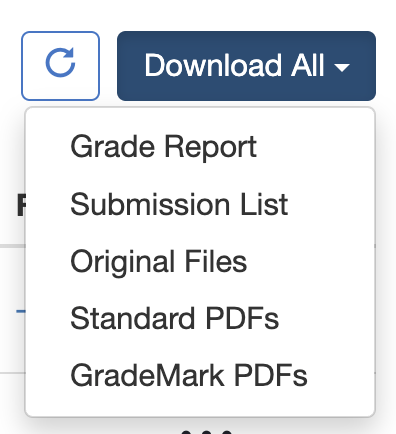
  2. In the Assignment Inbox, look for the Download button located in the top right corner of the submission list.

Choosing the Right Export Type

Turnitin offers five distinct ways to download your class data.

  • Grade Report: Download an XLSX file, so you can keep track of grades in your own way.
  • Submission List: A CSV file that contains the student names and whether or not they submitted
  • Original Files: Creates a ZIP file of all submissions in their original format, and appends the student’s name to the associated file included in the ZIP.
  • Standard PDF’s: Takes the original submission and converts it to standard PDF files, appends the student’s name and compresses all PDFs in a ZIP file.
  • Grademark PDFs: Creates PDF files from the original submissions, adds the Grademark report to the PDF, and compresses all the files in a ZIP file for download.

The Download Process

When you initiate a bulk download (especially for “All Reports and Files” or large classes), Turnitin processes the request in the background.

  1. Compression: You will see a notification stating that your files are being compressed into a ZIP file.
  2. Stay on the Page: For LTI 1.3, it is best to keep the browser tab open while the “Preparing Download” message is visible; however, the message also says you can close the window. But “best results” suggest keeping the window open.
  3. The Zip File: Once ready, the ZIP file will automatically download to your computer’s “Downloads” folder.
    • Note: For large classes (500 students), Turnitin may split the download into multiple ZIP files.

Enabling Anonymous Marking

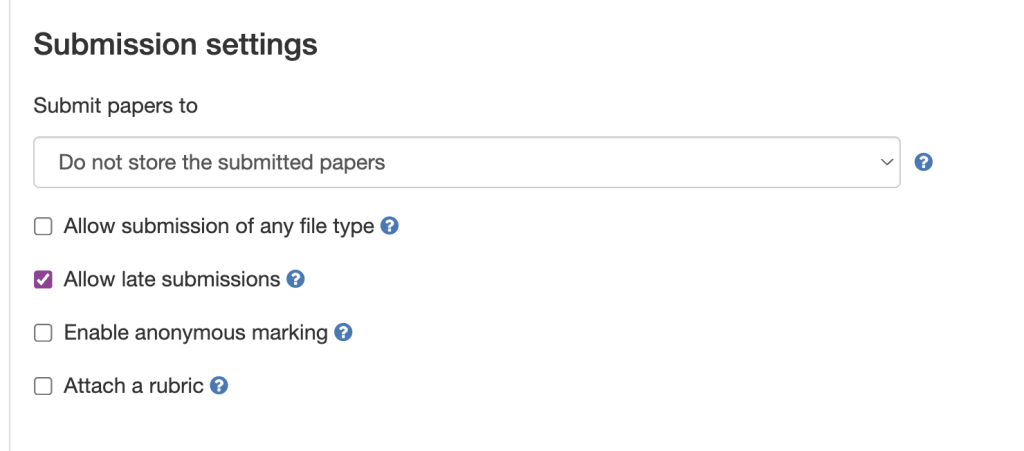
To use anonymous marking, you must enable it before any student submits. Once a single paper is submitted, this setting is locked and cannot be turned on for that assignment.

  1. Create a Turnitin activity in Moodle.
  2. Click Save and Display to launch the Turnitin window.
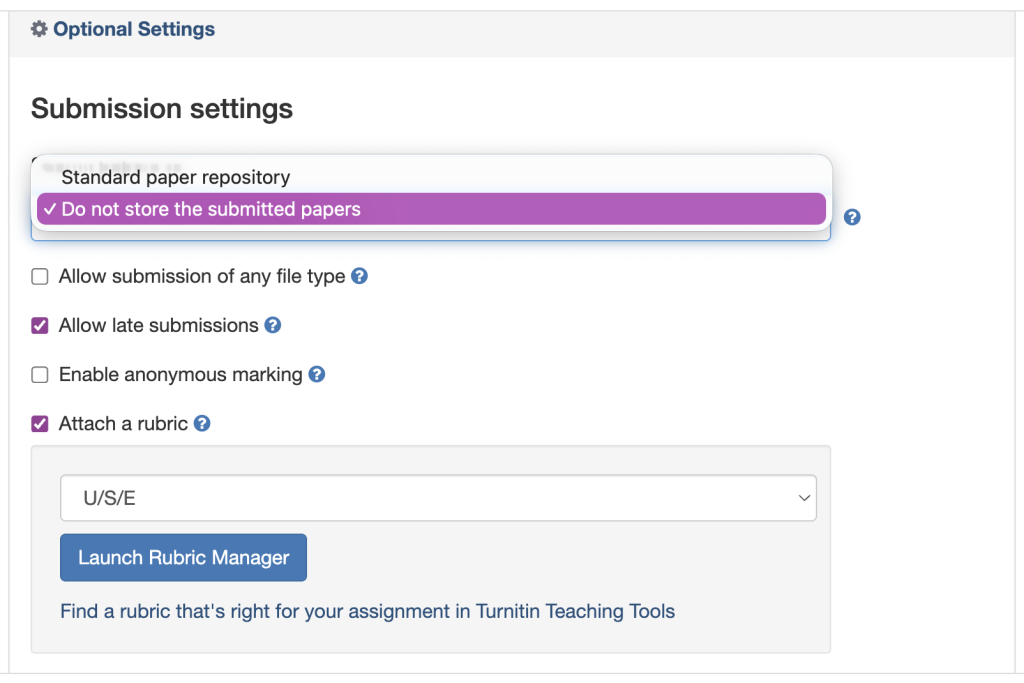
  3. Go to Settings (gear icon) > Optional Settings.

Check Enable anonymous marking

  1. Check the “Enable Anonymous Marking” box.
  2. Click Submit.

Grading Anonymously

In your Assignment Inbox, student names will be replaced by a placeholder like “Anonymous User” or “Student 1.” * Feedback Studio View: When you open a paper to grade, the name at the top left will also show as “Anonymous.”

  • Similarity Report: The report will function normally, but the author’s identity will remain hidden within the match details.

Video

Anonymous marking in Turnitin
This video provides a walkthrough of managing submissions and identifying matches in the Feedback Studio interface, the environment where you will be grading during an anonymous session.

Grade Syncing and the Feedback Release Date

The most important administrative rule for anonymous marking is how it handles the Moodle Gradebook.

The “Hidden” Grade: In an anonymous assignment, grades will not sync to the Moodle Gradebook while anonymity is active.

All student names and their corresponding grades are revealed and pushed to the Moodle Gradebook the moment the Feedback Release Date passes.

  • Manual Reveal: If you need the grades in Moodle before the scheduled release date, you must change the Feedback Release Date to a time in the past or use the “Reveal all identities” toggle in the settings.

Missing Names After Release Date

If the Feedback Release Date has passed but names are still showing as “Anonymous” in Moodle, click the Refresh Roster icon in the Turnitin Inbox.

Using Match Groups & Match Overviews in Turnitin

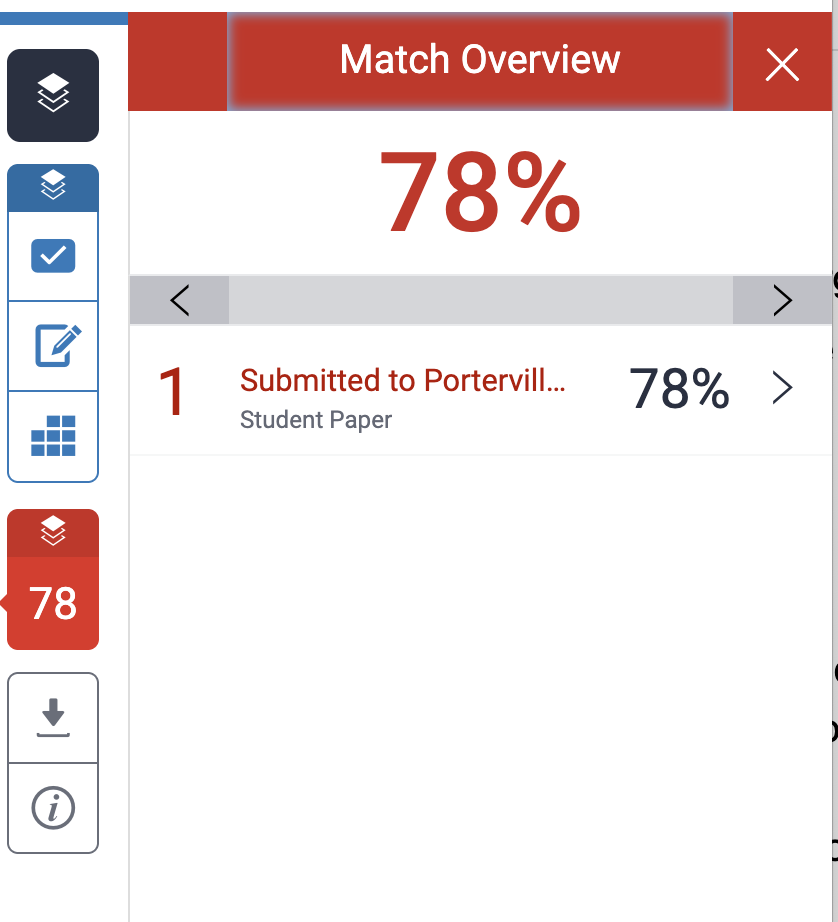
In the latest Turnitin LTI 1.3 update, the traditional “Match Overview” has been replaced by a more sophisticated system called Match Groups. Instead of just showing you a list of sources, Turnitin now automatically categorizes matching text based on how the student has used citations and quotation marks.

This allows you to quickly distinguish between accidental plagiarism, poor paraphrasing, and correctly cited work.

Understanding the 4 Match Groups

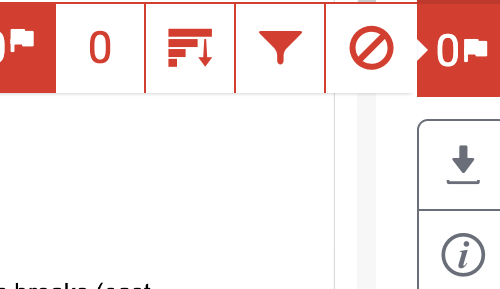
When you open the Similarity Report in the Next-Gen Feedback Studio, the right-hand panel (red icon) will display the Match Groups tab. The overall similarity score is now broken down into four distinct categories:

  1. Not Cited or Quoted (Red): The most critical group. This highlights text that matches a source but has no citation and no quotation marks. These are high-priority areas to review for potential plagiarism.
  2. Missing Quotation (Orange): Text that has an in-text citation but is not enclosed in quotation marks. This often indicates a student who has copied verbatim but forgot the quotes, or who has paraphrased too closely to the original.
  3. Missing Citation (Yellow): Text that is enclosed in quotation marks but lacks an in-text citation. This is usually a formatting error where the student attributed the words but forgot the source reference.
  4. Cited and Quoted (Blue): The “Safe” group. This highlights text that is correctly enclosed in quotes and has a corresponding citation.

Refining the Similarity Score

The most powerful feature of Match Groups is the ability to “clean up” the similarity score to see the true area of concern.

How to refine the report:

  • In the Match Groups panel, you will see a percentage next to each of the four categories.
  • Click the Eye Icon (Hide/Show) next to the Cited and Quoted group.
  • The overall similarity percentage at the top of the screen will instantly recalculate, excluding the correctly cited material.

Tip: By hiding the “Cited and Quoted” and “Bibliography” groups, the remaining percentage reflects only the problematic areas (Not Cited or Missing Quotes), giving you a much more accurate “integrity score” at a glance.

Navigating Source Cards

Clicking on any of the Match Groups will open a list of Source Cards related to that specific category.

  • Ranked List: Sources are ranked by the amount of matching text within that specific group.
  • Navigation Arrows: Use the < and > arrows on a source card to jump directly to each instance of that match within the student's paper.
  • Match Details: Each card tells you the total word count and the percentage of the paper that matches that specific source.

Match Groups vs. The "Sources" Tab

While Match Groups is the best tool for checking integrity and finding teachable moments, you can still access the traditional view:

  • The Sources Tab: Located next to the Match Groups tab at the top of the sidebar.
  • What it does: It provides a simple, descending list of every source found in the paper, regardless of how it was cited. Use this if you want to see if a student has over-relied on a single source (e.g., if one source accounts for 40% of the entire paper).

Uploading on a Student’s Behalf

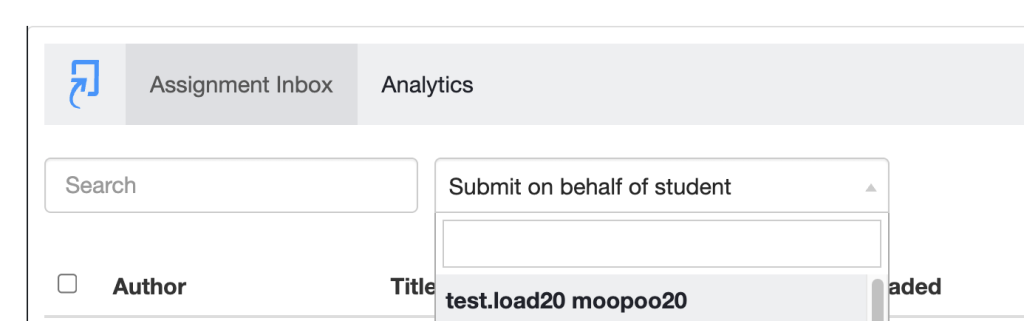
Navigate to your Moodle course and click on the Turnitin Assignment.

In the Assignment Inbox, locate the name of the student you are submitting for.

On the far right of the student’s row, click the Options menu (three dots).

Select Submit File.

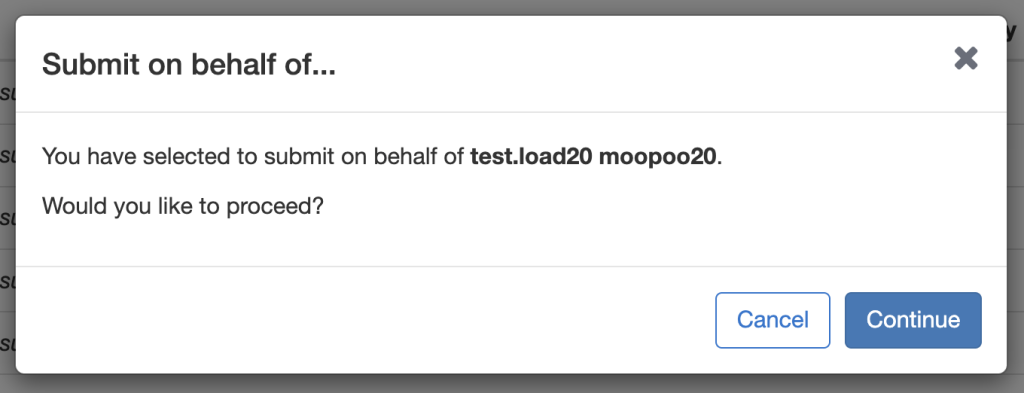
Choose a student to upload a file for.

Click Continue to proceed.

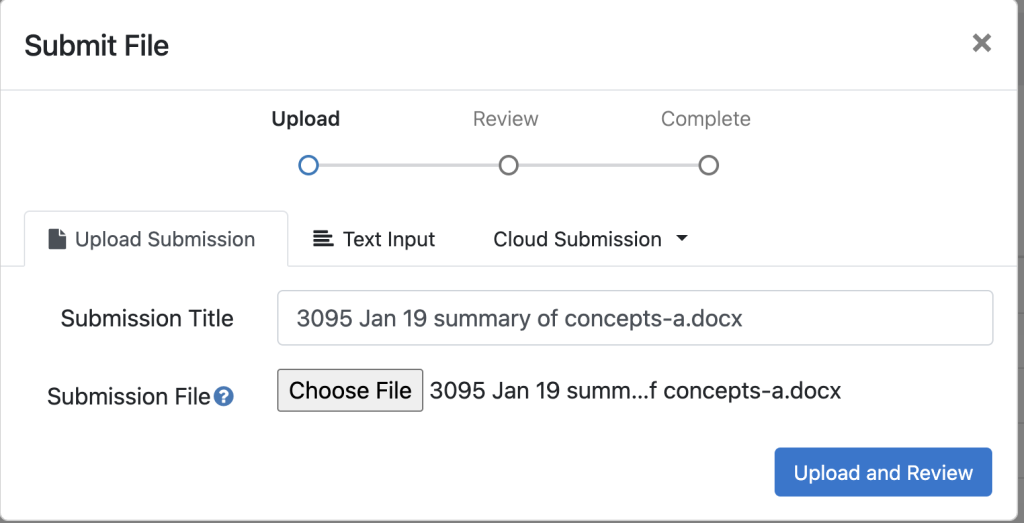
Choose a file to upload, or copy and paste text. Click Upload and Review.

After this is complete, you will see that this upload can be accessed again for grading via the link in the assignment inbox.

Importing and Exporting Rubrics in Turnitin

Watch the following video to see how Feedback Studio can import rubrics or export them for use in other courses.

Or follow the instructions below.

Exporting a Rubric

Use this when you have built a rubric and want to give the file to a fellow instructor.

  • In the Rubric Manager, click the menu icon in the top left and select the rubric you wish to share.
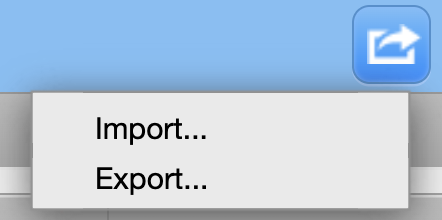
  • Click the Export/Import icon (box with an arrow) in the top right corner.
  • Select Export.
  • An .rbc file will download to your computer. You can now email this file to your colleague.

Importing a Rubric

Use this when a colleague has sent you a rubric file or you have a saved .rbc file from a previous semester.

  • Launch the Rubric Manager from any Turnitin assignment.
  • Click the Export/Import icon in the top right and select Import.
  • Drag and drop the .rbc file into the upload area or click “Select files” to browse your computer.
  • Once the green checkmark appears, click the Back arrow to view your newly imported rubric.

Similarity Report: Match Groups Sidebar

When you open a Similarity Report in the Feedback Studio, the right-hand panel now organizes findings by their nature rather than just by their source. This helps you refine the similarity score with just a few clicks.

1. The Three Categories

  • Matches: This group highlights text that matches other sources but is not enclosed in quotation marks. These are the areas that require the most scrutiny for potential plagiarism or poor paraphrasing.
  • Quotes: This group identifies text that is enclosed in quotation marks. Turnitin automatically recognizes these as intentional citations.
  • Bibliography: This group identifies the “References” or “Works Cited” section at the end of the paper.

Refining the Percentage Quickly

One of the most powerful features of the Match Groups update is the ability to instantly adjust the similarity score by toggling these categories on or off.

How to toggle findings:

  1. Open the Similarity Report from the Moodle assignment inbox.
  2. In the right-hand sidebar, look for the Match Groups overview.
  3. Next to “Quotes” and “Bibliography,” you will see eye icons or toggle switches.
  4. Click the toggle to exclude these categories.

The Result: The large percentage at the top of the report will automatically recalculate in real-time. For example, a paper might drop from a 35% total match to a 12% “Matches” score once the Bibliography and properly formatted Quotes are excluded. This 12% represents the “true” area of concern for the instructor.


Deep Dive: Using Match Groups for Instruction

  • Identifying “Ghostwriting” or AI: If a paper has a very low “Quotes” count but a high “Matches” count, it may indicate that the student is paraphrasing too closely to the source or using tools to spin text without proper attribution.
  • Checking Citation Habits: If the “Quotes” toggle is off but you still see significant matches that should have been quotes, it’s a teaching opportunity to show the student where they missed quotation marks.
  • Single-Source Analysis: You can still click into any specific match to see the original source, but the Match Groups view ensures you aren’t distracted by a long list of 1% matches from a bibliography.

Troubleshooting Tip: Missing Quotes

If Turnitin is not recognizing a quote (and therefore not putting it in the “Quotes” group), check the student’s formatting. Turnitin typically looks for standard double quotation marks (" "). If a student uses non-standard symbols or unique block-quote formatting, you may still need to manually exclude those matches using the Exclude Sources tool at the bottom of the sidebar.

Feedback Studio Upgrades

Turnitin has upgraded Feedback Studio. They have gathered feedback on instructor and student experiences for quite a while and have now released an updated version that implements the input they received. As of May 8th, 2025, users who utilize https://turnitin.com or the Turnitin assessment module within Moodle will use the updated version of Feedback Studio.

If you would like an update on the layout of the new features in the Feedback Studio regarding the feedback experience, please visit the link below.
https://guides.turnitin.com/hc/en-us/articles/35446790262541-Navigating-the-new-grading-and-feedback-experience#h_01JQP2T4BG2HADG262WRWJFC03

You can also keep reading for some highlights on the Next-Gen Interface for Feedback Studio

Using Feedback Studio

The interface is now more intuitive, moving away from text-heavy menus to a streamlined, icon-driven sidebar designed to maximize the grading space.

The Icon-Driven Sidebar: A Visual Refresh

The traditional vertical text labels on the right-hand side have been replaced with a minimalist icon dock. This “Visual Refresh” keeps the student’s paper the central focus while providing quick access to grading tools.

  • Similarity Layer (Red Icon): Access the redesigned Similarity Report and Match Groups.
  • QuickMarks (Blue Lightning Icon): Open your library of reusable comments.
  • Feedback Summary (Blue Speech Bubble Icon): Leave overall text or audio feedback and view Pinned Feedback.
  • Rubrics (Blue Grid Icon): Access the attached rubric or grading form to apply scores.

Prioritizing with Pinned Feedback

The Pinned Feedback feature is a major efficiency tool in the Next-Gen interface. It allows you to “pin” the most critical comments—such as a recurring grammar issue or a particularly strong insight—to ensure they don’t get lost in the margin.

How to Pin a Comment:

  1. Click on any QuickMark or Speech Bubble comment you have placed on the paper.
  2. In the floating comment card that appears, click the Options menu (three dots) in the top right corner.
  3. Select Pin Comment.
  4. A yellow pushpin icon will now appear at the top left of that specific comment card in the margin.

Why Pinning Matters:

Pinned comments are automatically aggregated at the bottom of the Feedback Summary side panel. When a student opens their report, they see these “priority” comments immediately below your overall Summary Comment, creating a clear “Action Item” list for their next revision.

Understanding Feedback Cards and Badges

In the margin of the paper, feedback is now displayed in “cards.” These cards use a new Badging System to tell you at a glance what kind of feedback is inside:

  • Speech Bubble: Standard text comment.
  • Lightning Bolt: A QuickMark from your library.
  • Number Icon: Indicates the feedback is linked to a specific Rubric criterion.
  • Yellow Pushpin: Indicates the feedback has been Pinned for priority.

Tip: You can now customize the color of your feedback cards (Blue, Green, or Pink). Many instructors use these to categorize feedback (e.g., Blue for grammar, Green for strong arguments).

Creating a Turnitin Assignment in Moodle

This tutorial demonstrates the LTI 1.3 for Turnitin assignments

In your Moodle course, toggle Edit mode on (top right).

In the desired week or section, click Add an activity or resource.

Select the Turnitin Assignment icon from the list of choices.

General Settings:

  • Activity name: Enter the title of the assignment.
  • Description: Provide instructions for your students (optional).

Click Show more… and make sure the Custom parameters field is empty.

With the LTI 1.3, the grades and user IDs are configured for you. No need to enter the LMS URL; everything is synced via deep linking.

Click Save and Display.

Once you click Save and Display, the Turnitin LTI 1.3 interface will launch within Moodle. You must complete this second stage to set your dates and similarity settings.

Click on the gear icon in the top left of the screen

Set Dates: Define your Start Date, Due Date, and Feedback Release Date.

  • Note: The Feedback Release Date is when students can see their marks and comments.

Optional Settings: Click the gear icon or “Optional Settings” link to configure:

  • Submission Storage: Choose whether to add papers to the standard repository. 
  • Similarity Report: Decide whether students can see their reports and whether you want to exclude small matches or bibliographies.

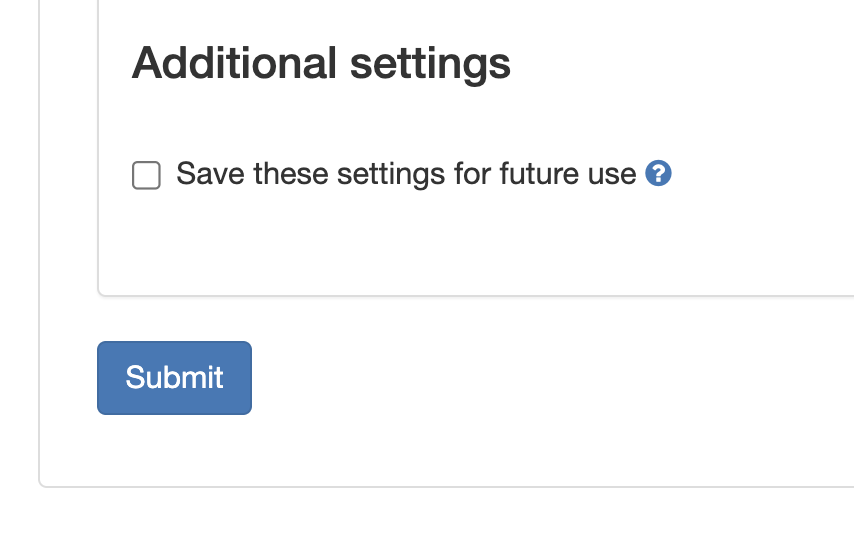
Once everything has been set to your specifications, be sure to click Submit. You can also choose whether to save these settings for future assignments.

Your assignment is now set up and ready to be synced with your student roster.

Using Rubrics with your Turnitin Assignments

One of the significant aspects of Turnitin is the ability to create Rubrics for your assignments. Rubrics allow you to keep the grading consistent throughout the grading process. It is beneficial if you have graders helping you mark the assignments.

You still can provide specified feedback, but the grade category descriptions in the rubric offer you and any graders a consistent and well-identified criterion for those grading and the students.

NOTE: With the transition to Turnitin LTI 1.3, the way you manage and share your rubrics has moved from the Moodle-specific “plugin” settings into the central Turnitin Rubric Manager. This shift means your rubrics are now tied more closely to your Turnitin instructor profile, allowing you to access them across different courses or even different institutions.

(more…)